A construction and demolition (C&D) roll-off is not junk removal, the crew loads it, not us, and the container stays on the jobsite for the duration of the phase it serves. C&D debris is the category the U.S. EPA…
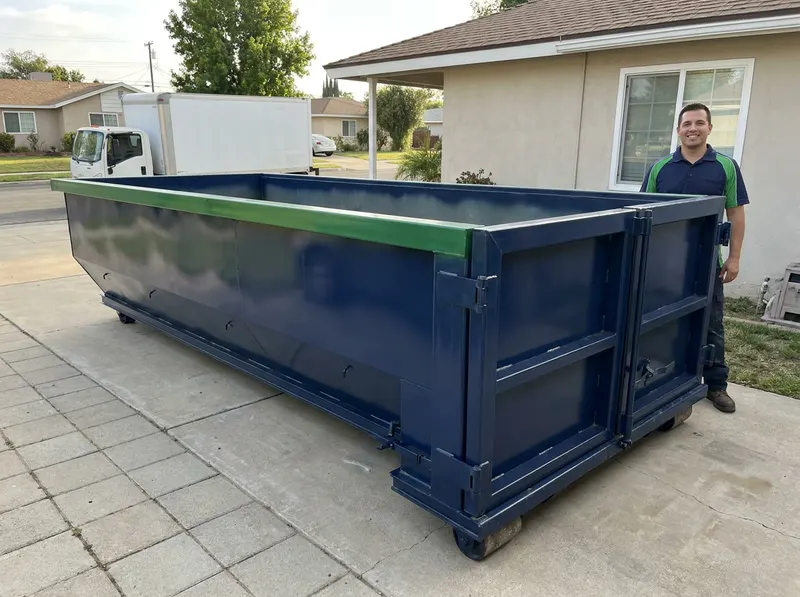
A construction and demolition (C&D) roll-off is not junk removal, the crew loads it, not us, and the container stays on the jobsite for the duration of the phase it serves. C&D debris is the category the U.S. EPA defines as material from building, renovation and demolition, roughly 600 million tons generated nationally each year per EPA construction and demolition materials data, and much of it is recoverable wood, metal and clean concrete. Sorting heavy inerts helps, since aggregate recyclers and the CalRecycle C&D program track diversion for permitted projects in California.
Size follows the job. Step 1: size the debris. A 10-yard ($695) holds about 4 pickup loads and suits a single bathroom demo or a small Del Rosa deck tear-out. A 15-yard ($750) fits a mid-size flooring or drywall strip. A 20-yard ($795), roughly 8 pickup loads, handles a kitchen-and-bath remodel near the University District or a garage rebuild in Shandin Hills. A 30-yard ($895) fits a full roof tear-off or a Muscoy addition, and a 40-yard ($995) takes whole-structure demolition and large Verdemont framing jobs. The trade-off is driveway footprint versus debris volume: a 40-yard needs about 22 feet of flat, clear length, so on a sloped Arrowhead hillside lot or a narrow Mount Vernon street a shorter 20-yard often lands cleaner.
Heavy inerts change the pick. Concrete, brick, asphalt and dirt are dense, a full 40-yard of concrete exceeds most road weight limits, so clean concrete and masonry go in a 10 or 15-yard bin kept low, while light bulky debris like framing and drywall goes in the larger sizes. If a demolition mixes both, splitting into two right-sized bins keeps the load legal and the price flat.
Step 2: confirm the fit. Josepha Dumpster Rental confirms the exact price and the driveway fit on-site before the bin drops, the same flat number quoted holds on the invoice. Step 3: place the bin. Roll-offs sit best on a driveway or private lot; setting a container in the public right-of-way along Arden-Guthrie or a Northpark street can require an encroachment permit from San Bernardino County, and a permit street may shift a same-day drop to next-day. Step 4: load it, keeping the fill level below the top rail so the load stays covered and road-legal per OSHA construction jobsite standards. Step 5: schedule pickup by phone when the phase wraps.
Contractors reuse recoverable material where they can, the USGBC LEED program" and green-building groups like NAHB credit C&D diversion, and painted or treated wood, adhesives and old fixtures may carry coatings covered under California DTSC hazardous waste rules. Asbestos-containing drywall or flooring in older Perris Hill homes must be abated separately under California Air Resources Board" and federal EPA asbestos" rules and never goes in a standard C&D bin. For debris volume estimating, the EPA WARM tool and industry references from the National Waste & Recycling Association help gauge weight before the drop.
Every job gets a firm, written price after an on-site visit.
Tell us about your construction & c&d dumpster rental job in San Bernardino and we'll send a clear, written quote, usually the same day.
 Josepha Dumpster Rental